
As of: 2026/06/06 –– Preliminary: Subject to Change!
Please note that changes can occur at any time!
June 10, 2026 | Presentations, Workshops & Networking-Dinner
Warm-up and come together in a relaxed atmosphere!
- June 10, 2026
- 03.30 pm - 10.00 pm
- NEMETSCHEK-HAUS
Check-in, welcome & networking with fresh coffee
- 03.30 - 04.00 pm
- FOYER
ROOM 1 –
C-SUITE

Track Chair: Svetoslav Stamenov
Managing Director, Founder & Manager, ITR Management Consult
Managing Director, Founder & Manager, ITR Management Consult
Experienced Founder with a demonstrated history of working in the information technology and services industry. Skilled in Enterprise Architecture Management, Project Management, Business Planning, Development Strategy, Application Portfolio Management and Teamwork. Strong professional with a Master’s degree focused in Industrial Management in Electronics and Communication from Technical University Varna and Master’s degree in Corporate Finances from University of Economics – Varna. Additionally holds PMP certification from the Project Management Institute.
ROOM 2 –
BUSINESS ARCHITECTURE

Track Chair: Whynde Kuehn
Managing Director, S2E Transformation
Managing Director, S2E Transformation
Whynde Kuehn is recognized globally as a highly sought-after pioneer, thought leader, educator, and advisor in strategy execution, transformation, and the intentional and sustainable design of organizations and business ecosystems, enabled by business architecture. She has worked with an extensive array of organizations to build their capacity for end-to-end strategy execution, including Fortune 500 and global enterprises, governmental and non-profit organizations, social enterprises, startups, and multi-stakeholder initiatives.
Whynde is founder and managing director of the global management consulting practice S2E Transformation, helping clients bridge the gap between strategy and execution, and achieve their greatest visions for business and digital transformation in a practical, business outcomes-focused way. She is co-founder of the Business Architecture Guild, a fellow with the Institute for Digital Transformation, co-founder of Women In Architecture (WIA), and a Global Leadership Committee Member of Women In Management (WIM). She is also the author of the book Strategy to Reality and co-author of The Execution Challenge. Whynde was honored as a WIM Top50 Global Award Winner in 2025 for Global Excellence in Digital Transformation and Strategy Execution.
ROOM 3 –
ENTERPRISE ARCHITECTURE MANAGEMENT

Track Chair: Leslie Robinet
Director of Global Services Office and Sustainability Director, Bizzdesign
Director of Global Services Office and Sustainability Director, Bizzdesign
Leslie Robinet is a transformation leader driven by purpose and committed to meaningful, lasting impact through a growth mindset. At Bizzdesign, she leads global enablement across people, processes, and technology, helping harmonize capabilities and strengthen the bridge from strategy to execution. Leslie brings a rich background in Enterprise Architecture, service excellence, and knowledge management. Before this, she’s held several leadership roles at Mega International, including Corporate Services Director and Services Director for multiple regions, where she enhanced service delivery, built methods and offers, and developed high‑performing, multicultural teams. Her early grounding in Industrial Systems Engineering and Lean Management in the U.S. established the systems‑thinking approach that continues to shape her work.
Leslie is deeply engaged in sustainability, for her company and for her community, co‑founder of a cooperative grocery promoting solidarity and ecology.
AI Beyond Chat: Build an AI-native Workspace and use it like a pro
Most people use AI the same way: open a chat window, ask, copy the answer out, close the tab. Tomorrow — fresh start, zero memory. It’s like hiring a brilliant assistant and giving them amnesia every night.
There’s a better way, and it has nothing to do with coding. You set up an AI-native workspace that a tool like Claude Code, RooCode, or Claude Cowork can read — and from there, a handful of concrete tricks turn it into something that actually pays off.
Whether you run IT for a whole company or have never written a line of code — there’s something in here for you. If there isn’t, I owe you a drink. 😉
- 4 - 4.30 pm
- ROOM 1 – C-Suite
- English

Anton Brass
People Development Manager iteratec
People Development Manager iteratec
With a strong foundation in medical informatics from Ruprecht-Karls-Universität Heidelberg, I have built my career at the intersection of technology and people development. Over the years, I’ve advanced from roles in software engineering and IT architecture to my current position as People Development Manager and Senior IT Architect. My experience spans over a decade, during which I have honed expertise in areas such as software development, Java programming, and Scrum methodologies while mentoring teams to achieve their full potential.
At iteratec, we specialize in driving digital transformation for businesses across industries like automotive, energy, financial services, logistics, media, and more. As a trusted end-to-end partner for innovation and technological advancement since 1996, we deliver tailored solutions—from custom software development to cutting-edge technologies like Blockchain and AI—helping organizations become digital champions. Our team of over 500 employees is committed to creating exceptional user experiences through innovative applications and robust digital infrastructures that empower our clients’ future growth. Contact me if you’d like to learn more about how we can help your business excel in the digital era!
Business Architecture: Handling Tradeoffs between Insight and Usability
Business architecture artifacts (such as, e.g., a capability map) have gained traction in various scenarios across strategy execution, transformation, and change in recent years. Using those artifacts, organizations typically seek to gain big picture insights, e.g., for better strategic and organizational alignment. At the same time, practitioners often want those artifacts to be readily understood and used by a wide range of stakeholders in the organization, letting them “see themselves within the maps.” All too often, this results in certain tradeoffs that need to be made. This session deals with the tradeoffs between insight and usability of business architecture artifacts (using the capability map as an example), and is designed to spark exchange around approaches of how to effectively handle such tradeoffs.
- 4 - 5 pm
- ROOM 2 – Business Architecture
- English

Daniel Simon
Managing Director, ACROSS & AHEAD
Managing Director, ACROSS & AHEAD
Physicists are better at understanding people
„Contrary to the archetypal image of physicists with corduroy trousers and knitted sweaters, I love working with people. Physics has taught me to think in systems and people always form complex systems.“
Markus is an Agile-Lean-catalyst who understands how to combine adaptive leadership, systemic self-reflection and valuecreation for exceptional results. He is fascinated by the interaction between people and the systems around them – across the boundaries of methodologies and frameworks. Over the past 15 years, he has worked in various leadership positions and organizational formats along the value chain. Markus introduced Agile ways of working into teams, led a global Lean & Leadership transformation of 30 production sites, trained +200 leaders and managers, was the driving force behind a group-wide culture initiative and coached C-level on strategy and execution.
Now he works in the sweet spot between Agile, Lean and Leadership. There he combines the best of all three worlds to help companies be effective and efficient at the same time.
In his spare time, Markus enjoys spending time with his lively family and is chairman of a tennis club. He enjoys cooking, listening to heavy metal music and reading epic fantasy novels.
Markus is the host of the “Strategiewerkstatt” podcast, where he asks the question: “How do we move from colorful slides to sustainable implementation of our strategy?”.
Enterprise Architecture in the Intelligence Era: Enabling Transformation While Evolving Through It
With AI reshaping how organizations operate and accelerating the pace of change, Enterprise Architecture (EA) is at an inflection point. This talk explores a dual transformation, where EA enables AI-driven change across the enterprise while evolving its own practice through the impact of AI. We’ll examine how EA provides the context, alignment, and governance needed to scale AI responsibly, and how to balance speed with control so guardrails are embedded into agentic systems without becoming the “No police.” In parallel, AI is transforming EA itself, reducing repetitive work, enabling teams to focus on higher-value insight and orchestration, and making enterprise knowledge more accessible beyond specialist roles. Together, these shifts are moving organizations toward more connected, insight-driven ways of working, strengthening alignment, breaking down silos, and accelerating transformation across the enterprise.
- 4 - 4.30 pm
- ROOM 3 – EAM
- English

Leslie Robinet
Director of Global Services Office and Sustainability Director, Bizzdesign
Director of Global Services Office and Sustainability Director, Bizzdesign
Leslie Robinet is a transformation leader driven by purpose and committed to meaningful, lasting impact through a growth mindset. At Bizzdesign, she leads global enablement across people, processes, and technology, helping harmonize capabilities and strengthen the bridge from strategy to execution. Leslie brings a rich background in Enterprise Architecture, service excellence, and knowledge management. Before this, she’s held several leadership roles at Mega International, including Corporate Services Director and Services Director for multiple regions, where she enhanced service delivery, built methods and offers, and developed high‑performing, multicultural teams. Her early grounding in Industrial Systems Engineering and Lean Management in the U.S. established the systems‑thinking approach that continues to shape her work.
Leslie is deeply engaged in sustainability, for her company and for her community, co‑founder of a cooperative grocery promoting solidarity and ecology.
Navigating The Era of AI-Native Enterprise Architecture With SAP LeanIX
Explore the capabilities we’re building to help you plan, design, and manage AI-enabled change in your organization. See how our road map including AI agent lifecycle management, transformation, and embedded AI use cases for enterprise architecture can help you maintain control and navigate change faster.
- 4.30 - 5 pm
- ROOM 1 – C-Suite
- English/Englisch

Gerrit Mewes
Principal Product Manager, SAP LeanIX.
Principal Product Manager, SAP LeanIX.
Gerrit Mewes is a Principal Product Manager at SAP LeanIX, driving the platform’s evolution toward AI governance and agentic enterprise architecture. Before joining LeanIX, he co-founded and led multiple ventures, giving him a founder’s perspective on building products and organizations that actually work. At the Lean Leader Summit, he will share SAP LeanIX’s roadmap for AI agent lifecycle management and embedded AI use cases designed to help organizations plan, design, and manage AI-enabled change with clarity and control.
Erfolgsfaktoren & Skills für ein wirksames Enterprise Architecture Management
Ein wirksames Enterprise Architecture Management liefert das Navigationssystem für die KI- und digitale Transformation. Der Fokus hat sich von der Ist-Dokumentation hin zu geschäftlichem Mehrwert, Geschwindigkeit und Entscheidungsunterstützung verschoben. Erfolgreich ist nur derjenige, der die Brücke zwischen Strategie und IT-Umsetzung schlägt. In diesem interaktiven Vortrag berichtet Inge Hanschke von den Ergebnissen aus über 50 Interviews zum neuen Buch „Wirksames strategisches IT-Management – lean, agil & systematisch“.
- 4.30 - 5 pm
- ROOM 3 – EAM
- German / Deutsch

Inge Hanschke
Chief IT-Management Consultant & Autorin, einfach & effektiv
Chief IT-Management Consultant & Autorin, einfach & effektiv
Inge Hanschke, Dipl.-Inf., is an expert in digital transformation, data management, organization 4.0, enterprise architecture management, business analysis & demand management, lean management, information security and data protection. In more than 30 years of professional experience, she has systematically and sustainably bridged the gap between IT and business as a digital innovator, IT manager, in an ERP product house and as a service provider. She has digitized the business model and IT in many companies, aligned IT to business requirements, professionalized IT management and beyond prepared companies for digital change.
“Easy and effective” is her motto. This is also reflected in numerous publications and in the book series published by Hanser-Verlag and Springer Verlag.
Digital Sovereignty: the need for a strategic management of your architecture in challenging times
- 5 - 5.30 pm
- ROOM 1 – C-Suite
- English/Englisch

Volker Pfirsching
Partner & Head of Innovation Central Europe, Arthur D. Little
Partner & Head of Innovation Central Europe, Arthur D. Little
Volker is a pioneer in digital shift and has deep expertise in comprehensive and successful digital transformation.
As a thought leader in Digital Disruption, Volker is engaged in many large-scale transformation projects, touching business and technology alike. He is founder of the Arthur D. Little Digital Center of Excellence and organizer and facilitator of Arthur D. Little digital roundtables, bringing together top executives to exchange in digital challenges.
After his studies, Volker joined the company in 2002 and has been a Partner since 2012. He has led a large number of client projects in Europe and abroad, focusing on successful and holistic digital transformations covering all aspects from strategy, business, technology and the essential “human factor”.
How to Become an In-Demand Business Architect
Contrary to where it’s often positioned, Architecture is not a senior technical role. Rather, it is a business leadership discipline that uses technology as one of its enabling tools.
When architects forget this, they become less relevant to the business.
When Architects, most specifically Business Architects, demonstrate focus on the best interests of the business, they become strategic advisors. And that difference determines whether Architecture creates value — or just complexity.
This interactive session will ask and answer the economics question “How do we drive an organization’s demand for the architectural value we want to supply?” It involves positioning, behavior, influence, expectation management, and above all growing interest, awareness, and the desire to engage with the value we can provide.
We often hear Architects, particularly Business Architects and Enterprise Architects, lament that they can’t get an invitation to the leadership table early enough in the strategic process, or in some cases we never make it to the executive table at all. We will openly share the reasons why this may be the case, where missteps and mistakes may have been made in the past, and reconcile how we must be positioned and change in the future. We will provide a variety of insights and practical tactics that will give you a clear path to the coveted role of Trusted Advisor in your organization, pinpointing the inflection point in your skill development that will make you a next-level Architect for your organization.
- 5 - 6 pm
- ROOM 2 – Business Architecture
- English

Linda Finley
President and Board Chair, TCBAF
President and Board Chair, TCBAF
Linda brings her experience as a leader, architect, advisor, community-builder, consultant, practitioner, speaker and coach for the benefit of your organization. Having recently completed her 5 year tenure as Chief Architect for Cargill and continuing since 2010 to lead the TCBAF Business Architecture Community, Linda’s commitment to equipping organizations and individuals for success persists. Her sincere and straight-forward style ensures her effectiveness as a trusted adviser who has enabled improvement, facilitated formation of vision and strategy, and guided desired transformation across a diverse set of organizations. Linda focuses on clarifying individual and organizational purpose as a critical starting point in maximizing the skills and talents individuals bring to organizations, and designing business capabilities for extraordinary results; she is an enthusiastic proponent of the practice and performance of enterprise and business architecture to drive strategy, transformation, and growth.
From Legacy to Target Architecture: Integration as the Backbone of a Complex Core Transformation
An outdated leasing core platform forces a complete overhaul of the entire architectural landscape — with three major transformation activities emerging in parallel: CRM, SAP S/4, and the leasing core migration itself. This talk addresses two dimensions. First, how a structured pre-project phase makes this complexity manageable — through clear stream decomposition, a central governance model for architectural decisions, and systematic assumption management. Second, how the right integration patterns and implementation approaches hold everything together: at the heart of it all sits an iPaaS — the integration layer acting as the key enabler, bridging old and new world seamlessly across all three transformation tracks.
- 5 - 5.30 pm
- ROOM 3 – EAM
- English

Johannes Landgraf
Head of Architecture and Data, Allane Mobility Group
Head of Architecture and Data, Allane Mobility Group
Networking-Dinner – More than 10 Years of Lean Conferences – 14 Events Since 2015
Hosting 14 events since 2015 – More than a decade of Innovation, Collaboration, and Growth
Join us for a relaxed networking dinner in a cozy setting, featuring delicious food and engaging conversations. It’s the perfect way to kick off the conference, offering a chance to get to know each other in a laid-back atmosphere and build new connections.
- 6 - 10 pm
- NEMETSCHEK-HAUS "Former Canteen"
June 11, 2026 | Presentations, Inspiration & Networking
Inspiration and know-how: specialist presentations that inspire!
- June 11, 2026
- 08.00 am - 05.15 pm
- NEMETSCHEK-HAUS
Check-in, welcome & networking with fresh coffee
- 08.00 - 8.30 am
- FOYER & SHOWROOM
STAGE – CIO / DIGITAL LEADERS

Track Chair: Karsten Voges
CIO | Keynote Speaker | Strategic Advisor | Founder
CIO | Keynote Speaker | Strategic Advisor | Founder
Karsten Voges brings 20 years of leadership experience, ranging from startups to Fortune 50 companies, plus various IT management consulting firms. His motto “lean & smart” together with his practical CIO Advisory is helping many CIOs and their IT organizations to thrive. With degrees in computer science (TUM, Germany) and an MBA (Open University, UK), he has been combining IT and business for years. As a product manager in enterprise architecture management, head of IT architecture and as a founder of a data collaboration platform, deep technical knowledge comes together with a lot of business acumen. Therefore Karsten Voges ensures fit for purpose solutions that are followed through with change management, plus that they are also implemented in state of the art technically. Karsten is regularly rocking the stage, e.g. LeanLeaderSummit, Forrester, Gartner, LeanIX Events, Planview Horizons, TexWeek, PennState etc.
Lean AI: Architecting the Invisible 80% of Enterprise Value
It’s 2026 and we are moving beyond chatbots to unlock real cognitive productivity.
Learn how „lean & smart“ approaches can address a major frustration for CIOs—disappointing AI ROI numbers. Many organizations are wasting money automating the visible 20% of work while ignoring the invisible 80%. This session shows how you can use an cognitive architecture to change the way you work. Brace yourself for some real strategic impact!
- 8.30 - 9 am
- STAGE – CIO / DIGITAL LEADERS
- English

Karsten Voges
CIO | Keynote Speaker | Strategic Advisor | Founder
CIO | Keynote Speaker | Strategic Advisor | Founder
Karsten Voges brings 20 years of leadership experience, ranging from startups to Fortune 50 companies, plus various IT management consulting firms. His motto “lean & smart” together with his practical CIO Advisory is helping many CIOs and their IT organizations to thrive. With degrees in computer science (TUM, Germany) and an MBA (Open University, UK), he has been combining IT and business for years. As a product manager in enterprise architecture management, head of IT architecture and as a founder of a data collaboration platform, deep technical knowledge comes together with a lot of business acumen. Therefore Karsten Voges ensures fit for purpose solutions that are followed through with change management, plus that they are also implemented in state of the art technically. Karsten is regularly rocking the stage, e.g. LeanLeaderSummit, Forrester, Gartner, LeanIX Events, Planview Horizons, TexWeek, PennState etc.
This is IT’s moment - Transform IT, Transform Everything
In the last three years, we have seen the biggest acceleration of technology in human history. This has created an incredible opportunity for IT leaders to transform their departments and strategic mandates.
In this session Michelle will share 6 opportunities for CIOs and IT Leaders to lean in to, as well as practical next steps.
She will also explain why, for the first time, the CIO has a clear career path to become a technology-first enterprise leader.
- 9 - 9.30 am
- STAGE – CIO / DIGITAL LEADERS
- English

Michelle van Wijk
Senior Executive Counselor, Info-Tech Research Group
Senior Executive Counselor, Info-Tech Research Group
As a trusted advisor Michelle combines her extensive skills and experience with Info-Tech Research Group’s best-practice research, blueprints, and executive services to support her C-suite clients in delivering outstanding results and value to their organizations.
Michelle advises on topics including strategy, transformation, governance, program and project delivery, multi-vendor environments, data-driven organizations, and technology and business alignment. She also works closely with clients on leadership, professional development, and networking.
Michelle is an accomplished executive with over thirty years’ experience in the leadership and delivery of business and IT strategic and implementation activities across both the private and public sectors. This experience has been gained through roles in global and boutique consulting organizations, industry, and the public sector across Australia, Asia, the UK, and Europe. Michelle has experience in owning and running small businesses, and founded and ran a for-purpose (not-for-profit) organization for just over two years.
Michelle’s international experience highlights her ability to be adaptable, quickly understand new industries and organizations, and work in harmony with different cultures and working styles – all of which enables her to deliver exceptional client services that represent best-practice while being appropriate for the maturity and culture of the organization.
Your Data Is Already for Sale – What the Darknet Reveals About Your Supply Chain Risk
While many organizations focus on securing their own systems, a growing number of breaches originate far beyond their direct control — within their software and supplier ecosystems.
In the Darknet, the consequences are already visible: access to corporate networks, sensitive data, and internal systems are actively traded — often without the affected companies even being aware until it is too late.
This talk connects two worlds that are rarely considered together: the hidden dynamics of modern supply chains and the very real marketplace of compromised data. Using real examples from security incidents and Darknet forums, it illustrates how seemingly minor vulnerabilities in dependencies or open-source components can evolve into serious business risks.
Rather than focusing on technical details, this session provides a strategic perspective on how these risks emerge and why traditional security approaches often fall short. Attendees will be challenged to rethink how they approach supply chain security — not as an abstract technical challenge, but as a critical factor for organizational resilience in an increasingly interconnected world.
- 9.30 - 10 am
- STAGE – CIO / DIGITAL LEADERS
- English

Maureen Erven
IT-Security Professional, team neusta
IT-Security Professional, team neusta
Physicists are better at understanding people
„Contrary to the archetypal image of physicists with corduroy trousers and knitted sweaters, I love working with people. Physics has taught me to think in systems and people always form complex systems.“
Markus is an Agile-Lean-catalyst who understands how to combine adaptive leadership, systemic self-reflection and valuecreation for exceptional results. He is fascinated by the interaction between people and the systems around them – across the boundaries of methodologies and frameworks. Over the past 15 years, he has worked in various leadership positions and organizational formats along the value chain. Markus introduced Agile ways of working into teams, led a global Lean & Leadership transformation of 30 production sites, trained +200 leaders and managers, was the driving force behind a group-wide culture initiative and coached C-level on strategy and execution.
Now he works in the sweet spot between Agile, Lean and Leadership. There he combines the best of all three worlds to help companies be effective and efficient at the same time.
In his spare time, Markus enjoys spending time with his lively family and is chairman of a tennis club. He enjoys cooking, listening to heavy metal music and reading epic fantasy novels.
Markus is the host of the “Strategiewerkstatt” podcast, where he asks the question: “How do we move from colorful slides to sustainable implementation of our strategy?”.
Networking with fresh coffee and snacks
- 10 - 10.30 am
- FOYER & SHOWROOM
STAGE –
CIO / DIGITAL LEADERS
Track Chair: Karsten Voges
CIO | Keynote Speaker | Strategic Advisor | Founder
CIO | Keynote Speaker | Strategic Advisor | Founder
Karsten Voges brings 20 years of leadership experience, ranging from startups to Fortune 50 companies, plus various IT management consulting firms. His motto “lean & smart” together with his practical CIO Advisory is helping many CIOs and their IT organizations to thrive. With degrees in computer science (TUM, Germany) and an MBA (Open University, UK), he has been combining IT and business for years. As a product manager in enterprise architecture management, head of IT architecture and as a founder of a data collaboration platform, deep technical knowledge comes together with a lot of business acumen. Therefore Karsten Voges ensures fit for purpose solutions that are followed through with change management, plus that they are also implemented in state of the art technically. Karsten is regularly rocking the stage, e.g. LeanLeaderSummit, Forrester, Gartner, LeanIX Events, Planview Horizons, TexWeek, PennState etc.
ROOM 2 –BUSINESS ARCHITECTURE
Track Chair: Whynde Kuehn
Managing Director, S2E Transformation
Managing Director, S2E Transformation
Whynde Kuehn is recognized globally as a highly sought-after pioneer, thought leader, educator, and advisor in strategy execution, transformation, and the intentional and sustainable design of organizations and business ecosystems, enabled by business architecture. She has worked with an extensive array of organizations to build their capacity for end-to-end strategy execution, including Fortune 500 and global enterprises, governmental and non-profit organizations, social enterprises, startups, and multi-stakeholder initiatives.
Whynde is founder and managing director of the global management consulting practice S2E Transformation, helping clients bridge the gap between strategy and execution, and achieve their greatest visions for business and digital transformation in a practical, business outcomes-focused way. She is co-founder of the Business Architecture Guild, a fellow with the Institute for Digital Transformation, co-founder of Women In Architecture (WIA), and a Global Leadership Committee Member of Women In Management (WIM). She is also the author of the book Strategy to Reality and co-author of The Execution Challenge. Whynde was honored as a WIM Top50 Global Award Winner in 2025 for Global Excellence in Digital Transformation and Strategy Execution.
ROOM 3 –
Lean
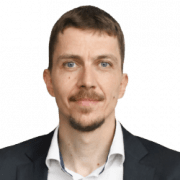
Track Chair: Stefan Zips
Projektmanager, MMS Technology GmbH
Projektmanager, MMS Technology GmbH
Stefan Zips is a senior project and program manager with 20 years of experience in international business and IT environments, including over 8 years in agile and classic project management. Throughout his career, he has led transformation, architecture and business change initiatives with a strong focus on cross-functional collaboration, organizational development and delivery excellence. With his background spanning enterprise architecture, digital transformation, governance and sustainable business steering, Stefan Zips brings a practical and strategic perspective on how organizations can combine agility, innovation and sustainability to create long-term impact. As a speaker on e.g. SAP LeanIX events he brings forward-looking view on how organizations can become not only faster and more adaptive, but also more responsible and future-ready.
Digital Policing - Today and Tomorrow
Beyond CSI Miami and similar shows on TV, a dramatic transformation is currently taking place in digital policing. The Bavarian Police are once again defending their leading position in Germany. As the creators of the Mobile Police program 10 years ago, they continue to tackle both current and future challenges. Digital sovereignty and IT security are their top priorities.
- 10.30 - 11 am
- STAGE – CIO / DIGITAL LEADERS
- German/Deutsch
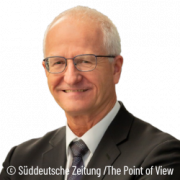
Georg Ringmayr
CIO – Versorgung und Digitalisierung der Polizei
CIO – Versorgung und Digitalisierung der Polizei
Setting up an Engineering Team for AI-first Transformation: A Business Architecture Perspective
AI at TR has been traditionally focused on product innovation and delivering cutting-edge tools to customers. As demand grew to transform internal business functions using AI, TR pursued a combined top-down and bottom-up approach, including enterprise enablement and upskilling, access to fit-for-purpose AI tools, and the establishment of an AI Centre of Excellence. These efforts unlocked meaningful productivity gains at the individual and team level, but true reimagination of end-to-end workflows remained more difficult. To address this, TR leveraged business architecture thinking to accelerate and improve internal AI-transformation outcomes. This session will delve into TR’s approach for identifying and prioritizing most impactful opportunities for AI-first transformation and setting up squads of „Forward Engineers“ to partner with domain leaders and rapidly deploy production-grade AI solutions that go beyond automation and drive true reimagination of end-to-end workflows.
- 10.30 - 11 am
- ROOM 2 – BUSINESS ARCHITECTURE
- English

Alex Kouptsov
Transformation Lead, Thomson Reuters
Transformation Lead, Thomson Reuters
I’m a strategy and operations professional with 10+ years of experience in driving cross-functional business design alignment and managing enterprise-wide business transformation and value creation initiatives within blue-chip companies. I have a proven track-record of collaborating effectively with executive-level stakeholders and managing lean, goal-oriented teams.
Lean Change Management: Making Change Work — Without the Weight
Organizations today face change from two directions. External: market disruption, regulatory shifts, technological acceleration. Internal: strategic pivots, leadership transitions, cost transformation, cultural evolution.
The uncomfortable truth most change programs ignore: the scale of the intervention rarely matches the scale of the problem. More workshops, more change agents, more steering committees — and still, adoption stalls, energy fades, and the next wave arrives before the last one landed.
This talk challenges the default model of change management by asking the question: What is the minimum input that actually moves people and organizations forward?
- 10.30 - 11 am
- ROOM 3 – Lean
- English

Donata von Schindau
Senior Consultant, Die Umsetzer
Senior Consultant, Die Umsetzer
Donata has supported companies across various industries, especially fast-growing organizations, in navigating complex change processes and turning them into sustainable success. With extensive experience in the consulting and FMCG industry, she is an expert in Strategy Consulting, Change Management and Coaching / Mentoring on an intercultural and intersectoral level — driven by a creative mindset and a strong people-centered approach.

Nicole Schmid
Consultant, Die Umsetzer
Consultant, Die Umsetzer
Nicole supports organizations in bridging the gap between human behavior and structural change — with a focus on strategic growth, organizational development, and HR. She brings a particular passion for helping teams and individuals unlock their full potential, whether through large-scale workshop facilitation, HR strategy design, or cross-generational collaboration. A background working with troubled youth has deeply shaped her approach: grounded in empathy and trust, and always with people at the center.
SOVEREIGN IS NOT THE VENDOR
„Digital sovereignty“ has become a marketing label. Vendors claim it. Compliance teams check for it. But sovereignty cannot be purchased — it can only be built.As CEO of Netop — secure remote access engineered for environments where downtime is not an option — Bernhard Hecker argues the critical question is not „Is this vendor sovereign?“ but „Does this architecture keep us capable of deciding?“Drawing on 40 years of Netop operating in defense, critical infrastructure, and regulated industries, he unpacks three practical tests: decision capability, reversibility, and accountability. Attendees leave with one question to use in their next vendor call — a question that changes how you negotiate, architect, and stay in control.
- 11 - 11.30 am
- STAGE – CIO / DIGITAL LEADERS
- English

Bernhard Hecker
CEO, Netop
CEO, Netop
Evolving Business Architecture: Lessons Learned from Herding Cats
- 11 - 11.30 am
- ROOM 2 – BUSINESS ARCHITECTURE
- English
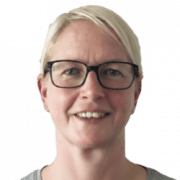
Kirsty McGregor
Business Architect, NatWest Group
Business Architect, NatWest Group
I am a collaborative, big picture thinking leader, who stands for authenticity, inclusivity and team success and have a visionary and coaching leadership style with over 25 years experience working within project design, delivery and implementation.
Since 2018 I’ve been leading the Business Architecture team within our Architecture and Engineering department. The team direct the business architecture discipline across the group, managing the current state reference architecture, lead our community of practice and work closely with our business, strategy & transformation teams.
Prior to this I was the Senior Business Architect in the RBS Personal and Business Banking (Retail) Investment and Architecture team, managing a wide range of responsibilities including architecture governance, target operating model, assessing and assuring programme design and reviewing our investment portfolio against bank strategy.
Before moving to Retail banking I worked within HR application implementation in various roles from Business Analyst to Build Manager and PeopleSoft production support and latterly as the HR Solutions Architect supporting the global PeopleSoft and payroll instances.
I am passionate about the customer experience and delivering the right design for them, the business and the wider architectural estate. This includes ensuring there is clear return on investment and delivering business and customer outcomes and benefits.
My experience includes management of design assurance, architecture and design governance, architectural artefacts and user journeys to support the understanding of the current and target architecture, blueprinting high-level designs, along with KPIs and metrics to define and track the operating model changes and change portfolio delivery.
I have in-depth experience of the project and application development life cycles starting with the completion of business cases to the delivery of the solution. The roles I have held have provided me with experience working with colleagues across the globe, third party suppliers and implementation partners identifying diverse business requirements along with legislative, regulatory and mandatory impacts.
I take great satisfaction delivering the best solution for our customers and staff by working closely with colleagues and stakeholders.
Navigating the Future of Code: Building a Resilient Engineering Workforce with Strategic Skill Management
Rapid technological change demands a new approach to talent development in Software Engineering. This presentation introduces a practical, integrated Strategic Skill Management (SSM) framework designed to build a future-ready workforce. We will outline its core components: a granular skill taxonomy, continuous data collection on customer needs and tech trends, and a leadership-driven process for defining strategic „Tech Profiles.“ Learn how we leverage GenAI tooling to enhance analysis and documentation, enabling seamless integration with existing development processes. This blueprint fosters clear skill alignment, guides targeted development, and shifts talent management from reactive to proactive. Discover actionable components for building an agile, resilient engineering workforce.
- 11 - 11.30 am
- ROOM 3 – Lean
- English

Dr. Oliver Kallenborn
Senior Manager Backend Development, BOSCH Digital
Senior Manager Backend Development, BOSCH Digital
Oliver brings more than 20 years of experience in engineering and IT, working in international organizations with complex structures and demanding business environments. His strength lies in defining strategy and making it work — from the shop floor to the boardroom — across business, engineering, and IT.
Over the course of his career, he has led international teams, delivered large ERP and engineering system programs, and supported organizations through major transformations such as M&A integrations, global rollouts, and organizational change. He has been responsible for core enterprise platforms, significant IT budgets, and the coordination of internal teams and external partners.
He has a strong background in understanding complex systems and organizations, which shapes how he approaches transformation, decision-making, and change in large IT and engineering environments. His leadership style is pragmatic and hands-on, with a focus on clarity, reliability, and solutions that work in everyday operations.
The AI-Native Enterprise: How AI Is Reshaping Work, Teams, Systems, and Decision-Making
In this session, Gilad Barash challenges the dominant narrative around enterprise AI – that value comes from deploying the right models – and makes the case that the real competitive advantage belongs to organizations that redesign how they operate, not just what tools they use.
Drawing on real-world implementations across procurement, logistics, and enterprise operations, this talk walks through three live use cases that move AI beyond productivity assistance into operational decision-making. The session introduces a practical three-layer maturity framework — from Personal AI to Workflow AI to Enterprise AI, and addresses why most AI initiatives fail before they scale: disconnected data, absent governance, and organizations that bolt AI onto broken processes and call it transformation. Attendees will leave with a concrete architecture for the AI-native enterprise and a clear answer to the question that actually matters: not „What AI tool should we buy?“ but „How do we redesign the way our organization operates?“
- 11.30 - 12 pm
- STAGE – CIO / DIGITAL LEADERS
- English

Gilad Barash
Senior Data/AI Strategist, Matrix DnA
Senior Data/AI Strategist, Matrix DnA
High-Velocity Post-Merger Integration Through Modern Enterprise Architecture
- 11.30 - 12 pm
- ROOM 2 – BUSINESS ARCHITECTURE
- English

Morten Stender
Managing Partner, Staun&Stender
Managing Partner, Staun&Stender
A people-oriented manager that likes to develop business with customers and team. Solid experience in strategy management, business development, sales and delivery.
Strong background in large cap segment across UK and the Nordics. With a background from consulting, delivery and sales helping customers to succeed with decision support of digital transformation and strategy execution.
As a team and company, we work with partners and consultants that form our ability to deliver rapid results. We provide the insights to enable change with strong solutions of planning and strategy execution.
With deep insight to governance, information management, statistics, dynamic models, AI, business blueprints, we help to make change and to provide data-driven governance faster and with sustainable business outcomes.
Beyond Frameworks: The End of Methodology Battles
Are we still focused on the destination, or are we just debating the journey? In many organizations, discussions about the „how“ (Scrum, Kanban, SAFe) now overshadow the „what.“ For CIOs and Enterprise Architects, this „methodology battle“ has become a burden: it ties up resources and drives up complexity instead of reducing it.
This presentation is not a death call on agility. Rather, it calls for the next level of maturity: an end to Agile for Agile’s sake. We must move away from the dogmatic rollout of frameworks and start building architectures that genuinely solve problems.
Drawing on real-world case studies from the pharmaceutical, MedTech, and transportation sectors, I will demonstrate what happens when you discard rigid templates:
1. Architecture over Rituals: Why a robust Enterprise Architecture and clear interface design generate more speed than a perfectly moderated Daily Stand-up.
2. Flow over Frameworks: How to identify and eliminate actual bottlenecks within the value stream, rather than imposing blanket methodologies onto teams.
3. Maturity over Compliance: How teams—even in safety-critical environments—can learn to take ownership of outcomes instead of hiding behind rigid process guidelines.
Who is this for? This talk is designed for CIOs and Architects who are ready to take off the „training wheels“ of standard frameworks. I will show you how to remain agile and compliant in highly regulated environments without becoming a slave to a methodology.
- 11.30 - 12 pm
- ROOM 3 – Lean
- German/Deutsch

Dr. Markus Schmotz
Managing Director, Wertwandler
Managing Director, Wertwandler
Physicists are better at understanding people
„Contrary to the archetypal image of physicists with corduroy trousers and knitted sweaters, I love working with people. Physics has taught me to think in systems and people always form complex systems.“
Markus is an Agile-Lean-catalyst who understands how to combine adaptive leadership, systemic self-reflection and valuecreation for exceptional results. He is fascinated by the interaction between people and the systems around them – across the boundaries of methodologies and frameworks. Over the past 15 years, he has worked in various leadership positions and organizational formats along the value chain. Markus introduced Agile ways of working into teams, led a global Lean & Leadership transformation of 30 production sites, trained +200 leaders and managers, was the driving force behind a group-wide culture initiative and coached C-level on strategy and execution.
Now he works in the sweet spot between Agile, Lean and Leadership. There he combines the best of all three worlds to help companies be effective and efficient at the same time.
In his spare time, Markus enjoys spending time with his lively family and is chairman of a tennis club. He enjoys cooking, listening to heavy metal music and reading epic fantasy novels.
Markus is the host of the “Strategiewerkstatt” podcast, where he asks the question: “How do we move from colorful slides to sustainable implementation of our strategy?”.
Networking over a delicious lunch buffet
- 12 - 01.30 pm
- FOYER & SHOWROOM
STAGE –
CIO / DIGITAL LEADERS
Track Chair: Karsten Voges
CIO | Keynote Speaker | Strategic Advisor | Founder
CIO | Keynote Speaker | Strategic Advisor | Founder
Karsten Voges brings 20 years of leadership experience, ranging from startups to Fortune 50 companies, plus various IT management consulting firms. His motto “lean & smart” together with his practical CIO Advisory is helping many CIOs and their IT organizations to thrive. With degrees in computer science (TUM, Germany) and an MBA (Open University, UK), he has been combining IT and business for years. As a product manager in enterprise architecture management, head of IT architecture and as a founder of a data collaboration platform, deep technical knowledge comes together with a lot of business acumen. Therefore Karsten Voges ensures fit for purpose solutions that are followed through with change management, plus that they are also implemented in state of the art technically. Karsten is regularly rocking the stage, e.g. LeanLeaderSummit, Forrester, Gartner, LeanIX Events, Planview Horizons, TexWeek, PennState etc.
ROOM 2 –
AI

Track Chair: Jean Gehring
Jeran Gehring Advisory
Jeran Gehring Advisory
I bridge the gap between business and IT to lead enterprise-wide transformation, modernization, and value creation. Partnering closely with C-level executives and architecture teams, I design agile, scalable operating models and architectures that drive growth, enable data-driven decision-making, and deliver measurable business outcomes.
With proven success across Fortune 500 and global organizations, I’ve led transformational programs that modernize legacy environments, elevate governance, and align technology with strategic priorities—especially in highly regulated industries. My deep boardroom experience spans public, private, and nonprofit sectors, where I advise on corporate governance, fiduciary oversight, CEO succession, and how to navigate disruption.
Passionate about making EA a true business enabler, I work with organizations reset operating models, optimize engagement strategies, and establish pragmatic, agile governance. I’m known for cultivating accountable, high-performing teams and creating architecture functions that are practical, impactful, and future-ready.
I’m fortunate to be recognized as a thought leader, author, researcher, and keynote speaker and deeply involved in advancing the EA profession. Past President of the Federation of Enterprise Architecture Professional Organizations (FEAPO) I also served on Penn State’s Center for Enterprise Architecture Board and am actively engage with the Chief Architect Network (CAN) and Women in Architecture (WIA).
Respected for integrity, clarity, and influence, I bring a collaborative and independent voice to the executive table—helping organizations lead with confidence and achieve sustainable success in dynamic markets.
ROOM 3 –
ENTERPRISE ARCHITECTURE MANAGEMENT
Track Chair: Leslie Robinet
Director of Global Services Office and Sustainability Director, Bizzdesign
Director of Global Services Office and Sustainability Director, Bizzdesign
Leslie Robinet is a transformation leader driven by purpose and committed to meaningful, lasting impact through a growth mindset. At Bizzdesign, she leads global enablement across people, processes, and technology, helping harmonize capabilities and strengthen the bridge from strategy to execution. Leslie brings a rich background in Enterprise Architecture, service excellence, and knowledge management. Before this, she’s held several leadership roles at Mega International, including Corporate Services Director and Services Director for multiple regions, where she enhanced service delivery, built methods and offers, and developed high‑performing, multicultural teams. Her early grounding in Industrial Systems Engineering and Lean Management in the U.S. established the systems‑thinking approach that continues to shape her work.
Leslie is deeply engaged in sustainability, for her company and for her community, co‑founder of a cooperative grocery promoting solidarity and ecology.
Digitalization at Mercedes-Benz: How Frontend Integration Accelerates and Modernizes Engineering Processes
The German automotive industry is in the middle of a deep transformation. The core product is changing, new global competitors are pushing aggressively into the market, and development cycles are getting significantly shorter. To stay competitive, Mercedes-Benz is digitalizing the vehicle, integrating it into wider digital ecosystems, and modernizing hundreds of internal enterprise IT systems.
As organizational structures and domain logic grow more complex, the classic separation of frontend and backend, combined with traditional data integration approaches, becomes a bottleneck: redundant work, inconsistent user experiences, and slow time-to-market.
In this talk, we’ll show how Mercedes-Benz uses a micro frontend architecture to integrate established, heterogeneous technology stacks into scalable enterprise IT platforms. Teams retain full ownership of their domain logic and tech choices, while shared boundaries enable consistency and reuse across the organization. The approach reduces cross-team dependencies, increases reusability, and significantly accelerates time-to-market.
We will share the strategic context driving this shift at Mercedes-Benz, the architectural decisions behind the platform, and where it stands today.
- 01.30 - 2 pm
- STAGE – CIO / DIGITAL LEADERS
- English

Dr. Thomas Meintrup
Chief Enterprise Architect Engineering IT, Mercedes-Benz Group
Chief Enterprise Architect Engineering IT, Mercedes-Benz Group

Michael Geers
Frontend Architekt, neuland
Frontend Architekt, neuland
Keynote: AI Isn’t Failing. Your Data Is. And Everyone Knows It.
Let’s dispense with the polite fiction. Across the AI market, we are enthusiastically building Ferraris on dirt roads and then acting surprised when the suspension snaps. Most organizations rush straight into models and proofs of concept without doing the unglamorous, essential work of data readiness—no assessment, no cleanup, no governance. Just optimism, deadlines, and a vendor deck that promises everything will be fine.
- 01.30 - 2 pm
- ROOM 2 – AI
- English
Jean Gehring
Jean Gehring Advisory
Jean Gehring Advisory
I bridge the gap between business and IT to lead enterprise-wide transformation, modernization, and value creation. Partnering closely with C-level executives and architecture teams, I design agile, scalable operating models and architectures that drive growth, enable data-driven decision-making, and deliver measurable business outcomes.
With proven success across Fortune 500 and global organizations, I’ve led transformational programs that modernize legacy environments, elevate governance, and align technology with strategic priorities—especially in highly regulated industries. My deep boardroom experience spans public, private, and nonprofit sectors, where I advise on corporate governance, fiduciary oversight, CEO succession, and how to navigate disruption.
Passionate about making EA a true business enabler, I work with organizations reset operating models, optimize engagement strategies, and establish pragmatic, agile governance. I’m known for cultivating accountable, high-performing teams and creating architecture functions that are practical, impactful, and future-ready.
I’m fortunate to be recognized as a thought leader, author, researcher, and keynote speaker and deeply involved in advancing the EA profession. Past President of the Federation of Enterprise Architecture Professional Organizations (FEAPO) I also served on Penn State’s Center for Enterprise Architecture Board and am actively engage with the Chief Architect Network (CAN) and Women in Architecture (WIA).
Respected for integrity, clarity, and influence, I bring a collaborative and independent voice to the executive table—helping organizations lead with confidence and achieve sustainable success in dynamic markets.
Enterprise Architecture Transformative Mindset – strengthening strateg­ic insights and accelerating an efficient change execution
Enterprise Architecture Transformative Mindset illustrated through case studies and real-life examples:
- Successful enterprise architecture and digital transformation require balancing processes, Organization, Data, and Technology.
- Strategic insights arise by valuing and challenging diverse perspectives.
- Efficient change is enabled through close exchange and collaboration between business and IT.
- An Enterprise Architecture transformative mindset accelerates an efficient change execution by Implementing changes to portfolios, repositories, and processes consistently and in alignement across all relevant business and IT stakeholders.
- 01.30 - 2 pm
- ROOM 3 – EAM
- English
Dr. Claudia Gsottberger
Senior Enterprise Architect, Munich RE
Senior Enterprise Architect, Munich RE
… connecting the dots …
business focused enterprise architect combining E- and X-shaped skill sets
Over the last few years in different roles focused on bridging between business and IT in order to shape high performing diverse teams and in order to build stable, reliable, cost-efficient, global IT solutions.
Specialties:
- enterprise architecture
- digital transformation, core transformation, new business models
- IT strategy, IT transformation, business development
data analytics, AI, AI governance - various methodical approaches
- excellent personal skills
e2e business process transformation - distributed agile, DevOps, cloud projects
- business process automation
- e2e software development life-cycle
- solid software engineering experience
- attitude to challenge requirements and present them from a different perspective to provide optimal solutions and avoid potential traps
- in depth (re-)insurance knowledge, focus on non-life underwriting & claims, client management, data analytics
Navigating the Sovereignty Continuum: Successful Leadership in Times of Arbitrary Economic Disruption
2026 is the year of digital sovereignty. However, to successfully govern the complexity of modern IT, it is not enough to simply sign up with one of the leading sovereign cloud service providers. Businesses within Europe discover the fallout of adopting technology from a features-first perspective which inherits risk, cost, and regulatory debt. Learn how to successfully combine the powers of your IT organization with effective governance that puts your requirements first and even helps mastering upcoming challenges such as AI Ethics and Certification.
- 2 - 2.30 pm
- STAGE – CIO / DIGITAL LEADERS
- English

Philipp Schneidenbach
Principal Enterprise Architekt, Materna SE
Principal Enterprise Architekt, Materna SE
Philipp Schneidenbach is an expert in Governance, Risk, Compliance, and Enterprise Architecture Management. As Head of Competence Center EAM at Materna SE, he combines his experience in consulting, practical implementation and auditing which is manifested through more than 25 years dating back to the days of being a dot-com entrepreneur, researcher, and international keynote speaker. In addition to his role in day-to-day business, Mr. Schneidenbach is involved in scientific research on AI ethics and medical compliance as a senior member of the IEEE, as well as an author of white papers, articles, and scientific books.
Why AI Transformation is a CEO Topic, not a CIO Topic — The Iceberg of AI-Native Business
AI capability is doubling every four months. Yet only 5% of companies generate meaningful value from AI. The real gap is not access to tools. It is how the organization is designed around them. So what do the five percent do differently? In this talk, Frank shares an engineering experiment from GuideCom AG that compressed hours of senior development work into minutes and reveals the four decisions no vendor can sell you. Speaking from experience as an AI transformation practitioner and strategic advisor, he introduces the Iceberg Framework for AI-Native Business, developed together with Maik Lange. You will leave with a clear vocabulary and diagnostic lens for AI transformation and for the conversation every CIO needs to have with the CEO. The hard truth: this transformation is not bought. It is ordered. By the CEO.
- 2 - 2.30 pm
- ROOM 2 – AI
- English

Frank Frey
CDO / Head of AI & Incubation, GuideCom
CDO / Head of AI & Incubation, GuideCom
Frank Frey is CDO / Head of AI & Incubation at GuideCom AG, where he is driving AI transformation in real time. With 20+ years of experience in digital transformation, innovation, and enterprise architecture, he has been leading AI initiatives in enterprise contexts for more than seven years. Alongside his role at GuideCom, he acts as a sparring partner and strategic advisor to executives, working with business networks, associations, and digital hubs across Germany’s Mittelstand and large-enterprise landscape. He believes AI strategy is a CEO topic, and that the most useful frameworks are built in the field, not on slide decks.
Building an Enterprise Architecture Management Capability - Ivory Tower or fighting Windmills?
Building an Enterprise Architecture Management (EAM) capability promises transparency, better decisions, and strategic alignment – but in reality, many organizations find themselves stuck between two extremes: an isolated “ivory tower” or a constant battle against day-to-day demands. This session shares the real-world journey of NürnbergMesse, a global exhibition company undergoing large-scale digital transformation.
Starting from a fragmented IT landscape and high expectations towards EAM, the organization quickly faced the typical pitfalls: low adoption, lack of impact, and a growing gap between architecture work and actual decision-making.
An ongoing journey that shows how EAM can evolve from an abstract concept into a practical capability – while highlighting that building it is never truly finished.
- 2 - 2.30 pm
- ROOM 3 – EAM
- English

Sascha Rosentritt
Enterprise Architect NürnbergMesse
Enterprise Architect NürnbergMesse
Sascha Rosentritt is a Manager at NürnbergMesse, where he established the company’s Enterprise Architecture Management (EAM) capability and plays a key role in driving its digital transformation. He is responsible for shaping enterprise-wide technology decisions and designing architectures for major strategic digital initiatives across the organization.
Prior to joining NürnbergMesse, Sascha worked at the Fraunhofer Institute for Integrated Circuits (IIS), focusing on strategy development and the derivation of digital business models.
Sustainable IT Strategy for CIOs
„Nearly 90% of a company’s sustainability-related strategy decisions are influenced by IT.“ (Letemple and Craven 2021)
The CIO role has a huge impact and responsibility when it comes to the sustainability – and therefore the „future readiness“ – of a company. However, many CIOs don’t yet incorporate this topic into their IT strategy, let alone work together with the Chief Sustainability Officer and other C-level roles across domains to increase the impact of measures.
In this talk, Anita will give an introduction into what makes a good Sustainable IT strategy, why you, too, should have one, and how your company can profit from changing perspectives on the topic.
- 2.30 - 3 pm
- STAGE – CIO / DIGITAL LEADERS
- English

Anita Schüttler
Head of IT Sustainability neuland
Head of IT Sustainability neuland
AI at Scale. Clarity, Collaboration and Real Impact
AI is no longer the shiny experiment in the corner. In 2026, it becomes an organisational discipline. One that demands more than tools, models and pilot projects. Many companies have invested in technology, explored use cases and built prototypes. Yet the real challenge now lies elsewhere: in enabling people, teams and leadership to work together in new ways.
Scaling AI is not a technical exercise. It requires alignment across Business, IT and HR, a shared understanding of goals and risks, and the ability to adapt how we collaborate, decide and learn. When these foundations are missing, AI remains a collection of isolated efforts. When they are present, AI becomes a driver of speed, clarity and measurable value.
This keynote makes tangible that the future of AI success is not just about algorithms. It is about organisational behaviour, decision-making, and the confidence to embed AI responsibly into everyday work. Interestingly, this is where Lean thinking and AI maturity meet: both require clarity, discipline and a deep awareness of how people interact.
Once organisations shift from “doing AI” to truly being an AI-enabled organisation, cultural transformation begins. And real impact follows.
- 2.30 - 3 pm
- ROOM 2 – AI
- English

Miriam Suchet
CEO, AI Strategy & Culture Advisor Suchet Consulting
CEO, AI Strategy & Culture Advisor Suchet Consulting
Miriam Suchet brings 23 years of leadership experience at the intersection of AI strategy, business innovation, and cultural transformation from global tech players like SAP to industrial leaders such as Wacker Chemie and consultancy roles at Campana & Schott. Her work focuses on turning AI into a reliable, scalable and ROI-driven capability that unites Business, IT and HR around clear goals and secure, future-proof execution.
With a background in business administration, business innovation, organisational psychology and extensive practice in enterprise-wide transformation, she combines strategic clarity and IT competence with cultural intelligence enabling companies to navigate AI adoption with confidence, responsibility and measurable impact. As CEO of Suchet Consulting, she supports executives in building AI strategies that reduce friction, accelerate collaboration and deliver real business value, not hype.
Miriam is a sought-after keynote speaker at leading conferences where clarity, leadership and practical transformation matter.
Zusammenspiel aus Produkt- und Unternehmensarchitektur: Wechselwirkungen verstehen und Entscheidungen verbessern
- 2.30 - 3 pm
- ROOM 3 – EAM
- German/Deutsch

Dominik Kürpick
Research Associate, Fraunhofer IEM
Research Associate, Fraunhofer IEM

Johannes Deckart
Senior Consultant, BOC Group
Senior Consultant, BOC Group
Networking with fresh coffee and cake
- 3 - 3.30 pm
- FOYER & SHOWROOM
STAGE – CIO / DIGITAL LEADERS
Track Chair: Karsten Voges
CIO | Keynote Speaker | Strategic Advisor | Founder
CIO | Keynote Speaker | Strategic Advisor | Founder
Karsten Voges brings 20 years of leadership experience, ranging from startups to Fortune 50 companies, plus various IT management consulting firms. His motto “lean & smart” together with his practical CIO Advisory is helping many CIOs and their IT organizations to thrive. With degrees in computer science (TUM, Germany) and an MBA (Open University, UK), he has been combining IT and business for years. As a product manager in enterprise architecture management, head of IT architecture and as a founder of a data collaboration platform, deep technical knowledge comes together with a lot of business acumen. Therefore Karsten Voges ensures fit for purpose solutions that are followed through with change management, plus that they are also implemented in state of the art technically. Karsten is regularly rocking the stage, e.g. LeanLeaderSummit, Forrester, Gartner, LeanIX Events, Planview Horizons, TexWeek, PennState etc.
AI Brain Fry: Protecting Human Attention in the Age of Infinite Capability
AI removed the natural governor that used to protect us—typing speed, research time, the friction of creation. Now the only limit is cognitive endurance. And most of us don’t know our limits until we’ve blown past them. This keynote explores why „more productive“ often means „more drained,“ why so many of us feel like distracted babysitters instead of makers, and what the research says actually works. From the biological ceiling on deep work to the Jevons Paradox of attention, you’ll understand why AI Brain Fry is an organizational risk and how to design work that protects human judgment while still capturing AI’s value.
- 3.30 - 4 pm
- STAGE – CIO / DIGITAL LEADERS
- English

Steffi Kieffer
Human-AI Collaboration
Human-AI Collaboration
For over 20 years, I’ve guided teams through technological change, combining my background in USteffi Kieffer has guided teams through complex transformation for over 20 years. With roots in UX design and Design Thinking, she brings methodological rigor to understanding how people actually work with AI—not just what the technology can do. She co-founded an AI startup in healthcare before ChatGPT existed, learning early what happens when humans work alongside AI under high-stakes conditions. Today, she specializes in the cognitive challenges of AI transformation: helping organizations scale AI capabilities without overwhelming their teams with prompt fatigue, agentic orchestration overload, and decision paralysis. Steffi is founder of The AI & Future Skills Retreat, guest lecturer for AI & Innovation at Hochschule der Bayerischen Wirtschaft (HDBW), host of the Insanely Human Podcast, co-host of Claude Code Meetup Munich, and co-author of the whitepaper „Teaming with AI.“ As a daily ice swimmer for over 850 days, she practices what she preaches about building resilience in turbulent times. X design and innovation to help organizations integrate AI in ways that work for humans, not against them.
My workshops draw from a decade of leading design thinking and innovation across industries, plus several years at the forefront of AI adoption. Long before generative AI became mainstream, I was developing conversational AI solutions for healthcare—giving me firsthand insight into both the technology’s potential and its human implications.
What makes my approach different? I practice what I teach. I’ve committed to 500 days of ice swimming, not because I love hypothermia, but because thriving with AI and diving into freezing water require the same skills: staying clear-headed under pressure and finding balance at the edge of your capabilities.
No buzzwords, no hype—just practical strategies for teams who want to make AI an asset, not a distraction.
Reboot Germany Now!
What do we mean by a „reboot“? The harsh reality is that Germany has lost its competitive edge. We are too slow and risk-averse. Merely matching the innovation speed of the US and Asia is no longer enough—that only stops us from falling further behind. We need a true reset.
Building on the insights of leading CIOs like Dr. Michael Müller-Wünsch, this session highlights a critical lever for Lean Leaders and IT decision-makers: Digital Sovereignty.
As CIOs, avoiding vendor lock-ins is in our DNA. It is time to extend this principle to countries and geopolitical dependencies. We must take digital sovereignty seriously and reduce our reliance step by step. Not through risky revolutions, but through targeted evolution—until our businesses regain the absolute freedom to simply „walk away from the negotiating table.”
Key Takeaways:
- Beyond Catch-up: Why matching global speed is only the baseline, not the ultimate goal.
- From Vendor to Country Lock-ins: Pragmatic approaches to making your IT strategy geopolitically resilient.
- Evolution over Revolution: Practical, step-by-step strategies to embed digital sovereignty into your daily business operations.
- Regaining Leverage: How to architect your IT so you always retain the power to say no.
- 4 - 4.30 pm
- STAGE – CIO / DIGITAL LEADERS
- English

Dr. Anke Sax
Geschäftsführerin (COO/CTO), KGAL
Geschäftsführerin (COO/CTO), KGAL
Veränderungserprobte, strategisch denkende und nachhaltig umsetzungsstarke Führungsperson mit einer langen Reihe erfolgreich gemeisterter Aufgaben und Projekte seit mehr als 30 Jahren.
Strategisch bewandert, transformatorisch aufgestellt, „handwerklich“ versiert, Governance erprobt.
Solide ausgebildet und neugierig geblieben.
Stabile Basis gebend, fordernd und wertschätzend.
Mit mehreren Auszeichnungen, darunter European Digital Leader 2020 und CIO des Jahres 2019, habe ich mich auf die Integration von IT-Strategien, Kulturwandel und modernen Technologien spezialisiert, um die Benutzerfreundlichkeit für Endkunden zu optimieren.
Seit über fünf Jahren unterstütze ich die KGAL GmbH & Co. KG mit einem ganzheitlichen Ansatz für die Optimierung von Geschäftsprozessen und strategischen Lösungen. Mein Fokus liegt auf der Entwicklung und Umsetzung von innovativen Ansätzen, die einen nachhaltigen Mehrwert schaffen.
Roundtable: Data Readiness as an Operating Discipline — Not a Technical Courtesy.
How ready is your data for real-world AI? This interactive session combines a concise keynote with a hands-on roundtable to explore what AI Data Readiness truly requires—beyond hype and tooling.
Drawing on a widely discussed LinkedIn article and practical insights from developing and piloting an AI Data Readiness Assessment with Tonic 3, we will discuss:
What typically breaks when AI initiatives scale
Which governance foundations are essential
How to stage readiness without burning budgets
The goal: participants leave with a practical, usable assessment approach to accelerate AI adoption with confidence.
- 4.30 - 5.15 pm
- STAGE – CIO / DIGITAL LEADERS
- English
Moderator: Jean Gehring
Jean Gehring Advisory
Jean Gehring Advisory
I bridge the gap between business and IT to lead enterprise-wide transformation, modernization, and value creation. Partnering closely with C-level executives and architecture teams, I design agile, scalable operating models and architectures that drive growth, enable data-driven decision-making, and deliver measurable business outcomes.
With proven success across Fortune 500 and global organizations, I’ve led transformational programs that modernize legacy environments, elevate governance, and align technology with strategic priorities—especially in highly regulated industries. My deep boardroom experience spans public, private, and nonprofit sectors, where I advise on corporate governance, fiduciary oversight, CEO succession, and how to navigate disruption.
Passionate about making EA a true business enabler, I work with organizations reset operating models, optimize engagement strategies, and establish pragmatic, agile governance. I’m known for cultivating accountable, high-performing teams and creating architecture functions that are practical, impactful, and future-ready.
I’m fortunate to be recognized as a thought leader, author, researcher, and keynote speaker and deeply involved in advancing the EA profession. Past President of the Federation of Enterprise Architecture Professional Organizations (FEAPO) I also served on Penn State’s Center for Enterprise Architecture Board and am actively engage with the Chief Architect Network (CAN) and Women in Architecture (WIA).
Respected for integrity, clarity, and influence, I bring a collaborative and independent voice to the executive table—helping organizations lead with confidence and achieve sustainable success in dynamic markets.
Moderator: Karsten Voges
CIO | Keynote Speaker | Strategic Advisor | Founder
CIO | Keynote Speaker | Strategic Advisor | Founder
Karsten Voges brings 20 years of leadership experience, ranging from startups to Fortune 50 companies, plus various IT management consulting firms. His motto “lean & smart” together with his practical CIO Advisory is helping many CIOs and their IT organizations to thrive. With degrees in computer science (TUM, Germany) and an MBA (Open University, UK), he has been combining IT and business for years. As a product manager in enterprise architecture management, head of IT architecture and as a founder of a data collaboration platform, deep technical knowledge comes together with a lot of business acumen. Therefore Karsten Voges ensures fit for purpose solutions that are followed through with change management, plus that they are also implemented in state of the art technically. Karsten is regularly rocking the stage, e.g. LeanLeaderSummit, Forrester, Gartner, LeanIX Events, Planview Horizons, TexWeek, PennState etc.
Dr. Anke Sax
Geschäftsführerin (COO/CTO), KGAL
Geschäftsführerin (COO/CTO), KGAL
Veränderungserprobte, strategisch denkende und nachhaltig umsetzungsstarke Führungsperson mit einer langen Reihe erfolgreich gemeisterter Aufgaben und Projekte seit mehr als 30 Jahren.
Strategisch bewandert, transformatorisch aufgestellt, „handwerklich“ versiert, Governance erprobt.
Solide ausgebildet und neugierig geblieben.
Stabile Basis gebend, fordernd und wertschätzend.
Mit mehreren Auszeichnungen, darunter European Digital Leader 2020 und CIO des Jahres 2019, habe ich mich auf die Integration von IT-Strategien, Kulturwandel und modernen Technologien spezialisiert, um die Benutzerfreundlichkeit für Endkunden zu optimieren.
Seit über fünf Jahren unterstütze ich die KGAL GmbH & Co. KG mit einem ganzheitlichen Ansatz für die Optimierung von Geschäftsprozessen und strategischen Lösungen. Mein Fokus liegt auf der Entwicklung und Umsetzung von innovativen Ansätzen, die einen nachhaltigen Mehrwert schaffen.

Joe Edwards
Chief Executive Officer, Tonic3
Chief Executive Officer, Tonic3
Stefan Zips is a senior project and program manager with 20 years of experience in international business and IT environments, including over 8 years in agile and classic project management. Throughout his career, he has led transformation, architecture and business change initiatives with a strong focus on cross-functional collaboration, organizational development and delivery excellence. With his background spanning enterprise architecture, digital transformation, governance and sustainable business steering, Stefan Zips brings a practical and strategic perspective on how organizations can combine agility, innovation and sustainability to create long-term impact. As a speaker on e.g. SAP LeanIX events he brings forward-looking view on how organizations can become not only faster and more adaptive, but also more responsible and future-ready.
Steffi Kieffer
Human-AI Collaboration
Human-AI Collaboration
For over 20 years, I’ve guided teams through technological change, combining my background in USteffi Kieffer has guided teams through complex transformation for over 20 years. With roots in UX design and Design Thinking, she brings methodological rigor to understanding how people actually work with AI—not just what the technology can do. She co-founded an AI startup in healthcare before ChatGPT existed, learning early what happens when humans work alongside AI under high-stakes conditions. Today, she specializes in the cognitive challenges of AI transformation: helping organizations scale AI capabilities without overwhelming their teams with prompt fatigue, agentic orchestration overload, and decision paralysis. Steffi is founder of The AI & Future Skills Retreat, guest lecturer for AI & Innovation at Hochschule der Bayerischen Wirtschaft (HDBW), host of the Insanely Human Podcast, co-host of Claude Code Meetup Munich, and co-author of the whitepaper „Teaming with AI.“ As a daily ice swimmer for over 850 days, she practices what she preaches about building resilience in turbulent times. X design and innovation to help organizations integrate AI in ways that work for humans, not against them.
My workshops draw from a decade of leading design thinking and innovation across industries, plus several years at the forefront of AI adoption. Long before generative AI became mainstream, I was developing conversational AI solutions for healthcare—giving me firsthand insight into both the technology’s potential and its human implications.
What makes my approach different? I practice what I teach. I’ve committed to 500 days of ice swimming, not because I love hypothermia, but because thriving with AI and diving into freezing water require the same skills: staying clear-headed under pressure and finding balance at the edge of your capabilities.
No buzzwords, no hype—just practical strategies for teams who want to make AI an asset, not a distraction.
Linda Finley
President and Board Chair, TCBAF
President and Board Chair, TCBAF
Linda brings her experience as a leader, architect, advisor, community-builder, consultant, practitioner, speaker and coach for the benefit of your organization. Having recently completed her 5 year tenure as Chief Architect for Cargill and continuing since 2010 to lead the TCBAF Business Architecture Community, Linda’s commitment to equipping organizations and individuals for success persists. Her sincere and straight-forward style ensures her effectiveness as a trusted adviser who has enabled improvement, facilitated formation of vision and strategy, and guided desired transformation across a diverse set of organizations. Linda focuses on clarifying individual and organizational purpose as a critical starting point in maximizing the skills and talents individuals bring to organizations, and designing business capabilities for extraordinary results; she is an enthusiastic proponent of the practice and performance of enterprise and business architecture to drive strategy, transformation, and growth.
Anton Brass
People Development Manager iteratec
People Development Manager iteratec
With a strong foundation in medical informatics from Ruprecht-Karls-Universität Heidelberg, I have built my career at the intersection of technology and people development. Over the years, I’ve advanced from roles in software engineering and IT architecture to my current position as People Development Manager and Senior IT Architect. My experience spans over a decade, during which I have honed expertise in areas such as software development, Java programming, and Scrum methodologies while mentoring teams to achieve their full potential.
At iteratec, we specialize in driving digital transformation for businesses across industries like automotive, energy, financial services, logistics, media, and more. As a trusted end-to-end partner for innovation and technological advancement since 1996, we deliver tailored solutions—from custom software development to cutting-edge technologies like Blockchain and AI—helping organizations become digital champions. Our team of over 500 employees is committed to creating exceptional user experiences through innovative applications and robust digital infrastructures that empower our clients’ future growth. Contact me if you’d like to learn more about how we can help your business excel in the digital era!
End of the day and eventful experience
- 5.15 pm